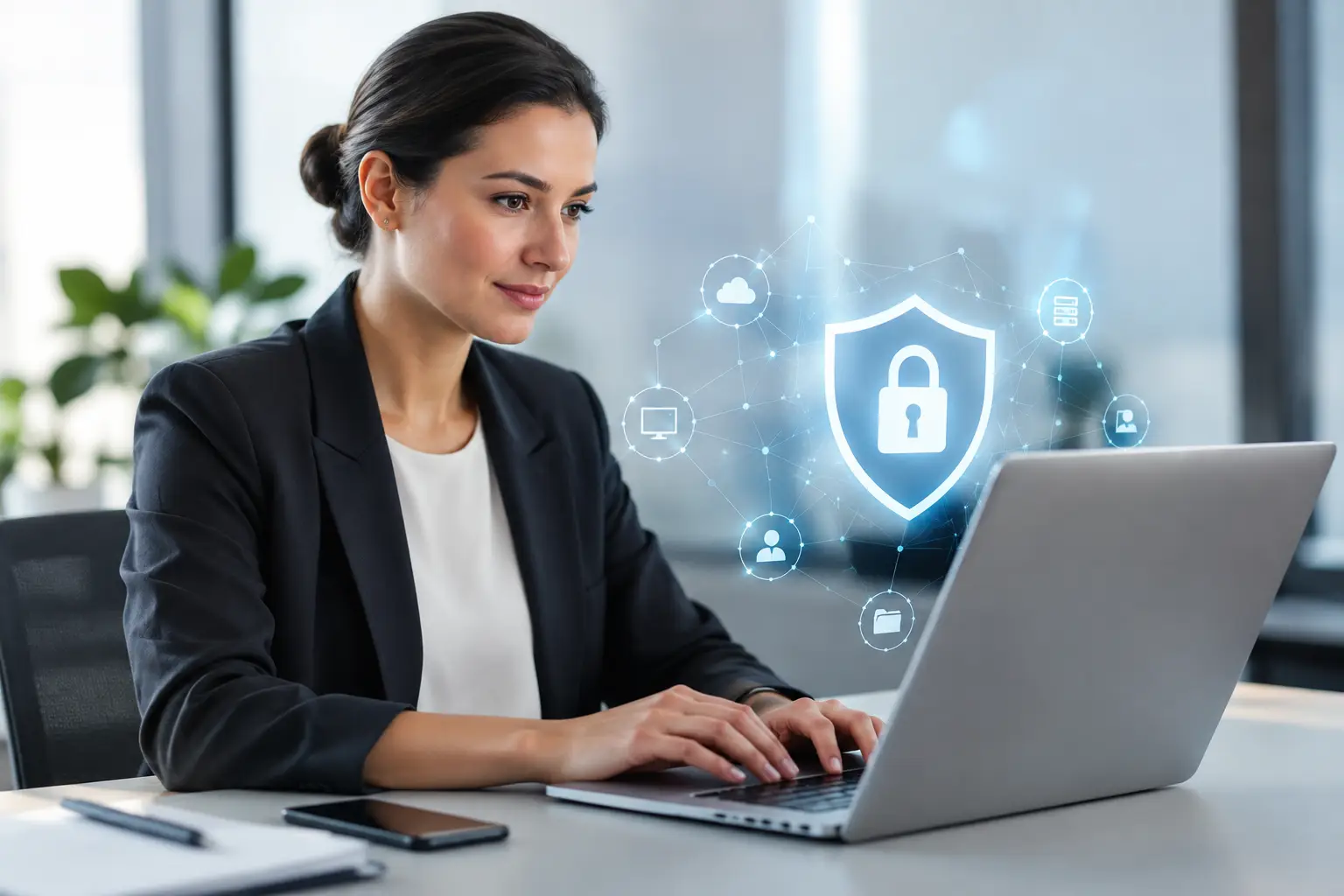
A suspicious email reaches a staff member at 8:12 a.m. By 8:20, a stolen password can give an attacker access to email, cloud files, financial records, or customer information. The difference between a close call and a business interruption is rarely luck. It is whether your cybersecurity services are actively watching, protecting, and responding before a small event becomes a costly one.
For small and midsize organizations, cybersecurity is not a product you buy once and forget. It is an ongoing business function that protects productivity, revenue, client trust, and your ability to operate. The right approach should fit how your people work, what data you handle, and the consequences your organization faces if systems go down.
What Cybersecurity Services Should Do for Your Business
Cybersecurity services should give your organization more than antivirus software and a monthly report. They should reduce the chance of an attack, limit damage when something gets through, and help your team recover without unnecessary downtime.
That starts with visibility. You need to know what devices connect to your network, where important data lives, who has access to it, and whether your systems are properly updated. A business cannot protect technology it does not fully understand.
From there, security becomes a practical layer across daily operations. Email needs protection because phishing remains one of the most common entry points for ransomware and account compromise. Workstations and servers need monitoring because a missed update or unusual login can signal a problem. Backups need testing because a backup that cannot be restored does not protect the business when it matters.
A strong provider also connects security to business outcomes. If an employee cannot access a required application, if a server fails, or if a vendor account is compromised, the response should focus on getting your organization safely back to work. Security and support should not operate as separate conversations.
The Core Layers of Effective Cybersecurity Services
No single tool stops every threat. Effective protection comes from several coordinated controls, managed consistently over time. The exact mix depends on your industry, size, systems, and compliance obligations, but most organizations need coverage in a few essential areas.
24/7 Monitoring and Threat Response
Cyber threats do not follow business hours. A suspicious login, malware alert, or attempted network connection at night should not wait until the next morning for review. Continuous monitoring can identify unusual activity early and give a response team time to contain it.
This does not mean every alert is an emergency. Technology environments generate noise. The value of managed monitoring is having experienced professionals investigate what matters, escalate real risks, and document the actions taken. That helps your internal team avoid alert fatigue while keeping threats from being ignored.
Email, Identity, and Access Protection
Many serious incidents begin with a convincing message that appears to come from a colleague, client, bank, or vendor. Email filtering, phishing protection, and authentication controls can reduce exposure before an employee clicks a harmful link.
Identity protection matters just as much. Multi-factor authentication makes a stolen password far less useful to an attacker. Access controls ensure employees can reach the systems they need without giving every account broad access to sensitive records. When someone changes roles or leaves the organization, their access should be adjusted promptly.
These controls can feel inconvenient if they are poorly implemented. The goal is not to create friction for its own sake. It is to apply practical safeguards that protect high-risk systems while keeping employees productive.
Endpoint, Network, and Server Security
Every laptop, desktop, mobile device, server, firewall, and wireless network creates part of your attack surface. Endpoint protection helps detect malicious activity on individual devices. Firewall management and network monitoring help control traffic entering and leaving the business. Patch management closes known software weaknesses before attackers can exploit them.
For organizations with remote or hybrid staff, these protections need to extend beyond the office. A home-connected laptop still accesses company email, cloud applications, and shared files. Consistent policies, secure remote access, and device management help maintain coverage wherever work happens.
Backup, Recovery, and Business Continuity
Prevention is necessary, but it is not a guarantee. Hardware fails. Employees make mistakes. Vendors experience outages. Ransomware can disrupt even organizations with multiple security tools in place.
That is why recovery planning belongs inside your security strategy. Your business should maintain protected backups, know which systems must be restored first, and test the recovery process regularly. A recovery plan should answer practical questions: Can employees access essential applications? How quickly can files be restored? Who makes decisions if a critical system is unavailable?
Recovery goals vary. A medical practice may prioritize patient scheduling and records. A law firm may need immediate access to case files and secure communications. A municipal department may need public-facing systems and internal operations restored in a specific order. The right plan reflects those realities.
Compliance Is More Than Checking a Box
Organizations in healthcare, legal services, finance, public safety, and other regulated fields often face added responsibilities around privacy, records, access, and incident reporting. Even businesses without a formal compliance mandate may have contractual requirements from clients, insurers, or vendors.
Cybersecurity services can help translate those obligations into workable policies and technical controls. That may include access reviews, encryption, audit logs, data retention practices, secure backup procedures, employee training, and documented incident response plans.
Compliance should not become a binder that sits unused on a shelf. Policies need to match the way employees actually work. If a security policy is too complicated to follow, staff will find shortcuts. Clear expectations, useful training, and responsive support make security easier to maintain day after day.
How to Evaluate a Cybersecurity Partner
A cybersecurity provider should be accountable, not distant. Before choosing a partner, ask how they monitor systems, how quickly they respond to incidents, and what happens when your team needs help after hours. Ask whether they will explain risks in plain language and provide recommendations based on your actual priorities rather than a generic checklist.
You should also understand what is included. Some providers sell individual security tools but leave coordination, response, and recovery to your staff. Others provide broader managed coverage that includes monitoring, endpoint protection, backup oversight, patching, security guidance, and help desk support. Neither model is automatically right for every organization, but the responsibilities should be clear.
Look for a provider that takes time to learn your workflows. An office with a single location has different needs from a multi-site organization. A company that relies heavily on cloud software has different risks than one with on-premises servers. If your team handles sensitive client records, payment information, or health data, that should shape the security plan from the beginning.
AComp NJ works with organizations that need a hands-on technology partner, not a ticket queue with no context. That means listening first, building protection around real operations, and staying available when decisions need to be made quickly.
Security Training Turns Employees Into a Stronger First Line
Employees should not be blamed for every security risk, but they should be prepared for common threats. Brief, ongoing training helps staff recognize phishing attempts, report suspicious activity, use passwords responsibly, and understand why certain safeguards are in place.
The best training uses realistic examples from the work employees perform. A finance employee may receive a fake payment-change request. A healthcare administrator may encounter a fraudulent records request. An executive may be targeted by a message that appears to come from a trusted vendor. Relevant scenarios are more useful than technical lectures.
Training should also make reporting easy. If an employee clicks a suspicious link, fast reporting can prevent a wider incident. A culture that encourages immediate reporting is safer than one where people stay quiet because they fear blame.
Build Security Around Business Priorities
The right cybersecurity plan is not necessarily the one with the longest tool list. It is the one that protects the systems, data, and workflows your organization cannot afford to lose. Start by identifying your most critical assets, the likely ways they could be disrupted, and the recovery time your operations can realistically tolerate.
From there, a clear roadmap can improve protection in manageable steps. You may begin with multi-factor authentication, email security, reliable backups, and patch management. As needs grow, add deeper monitoring, compliance support, network segmentation, security assessments, and incident response planning.
The goal is straightforward: keep your people productive, keep your data protected, and keep your business ready to respond when something does not go as planned. A conversation with an accountable IT team can turn that goal into a practical plan built for the way your organization works.