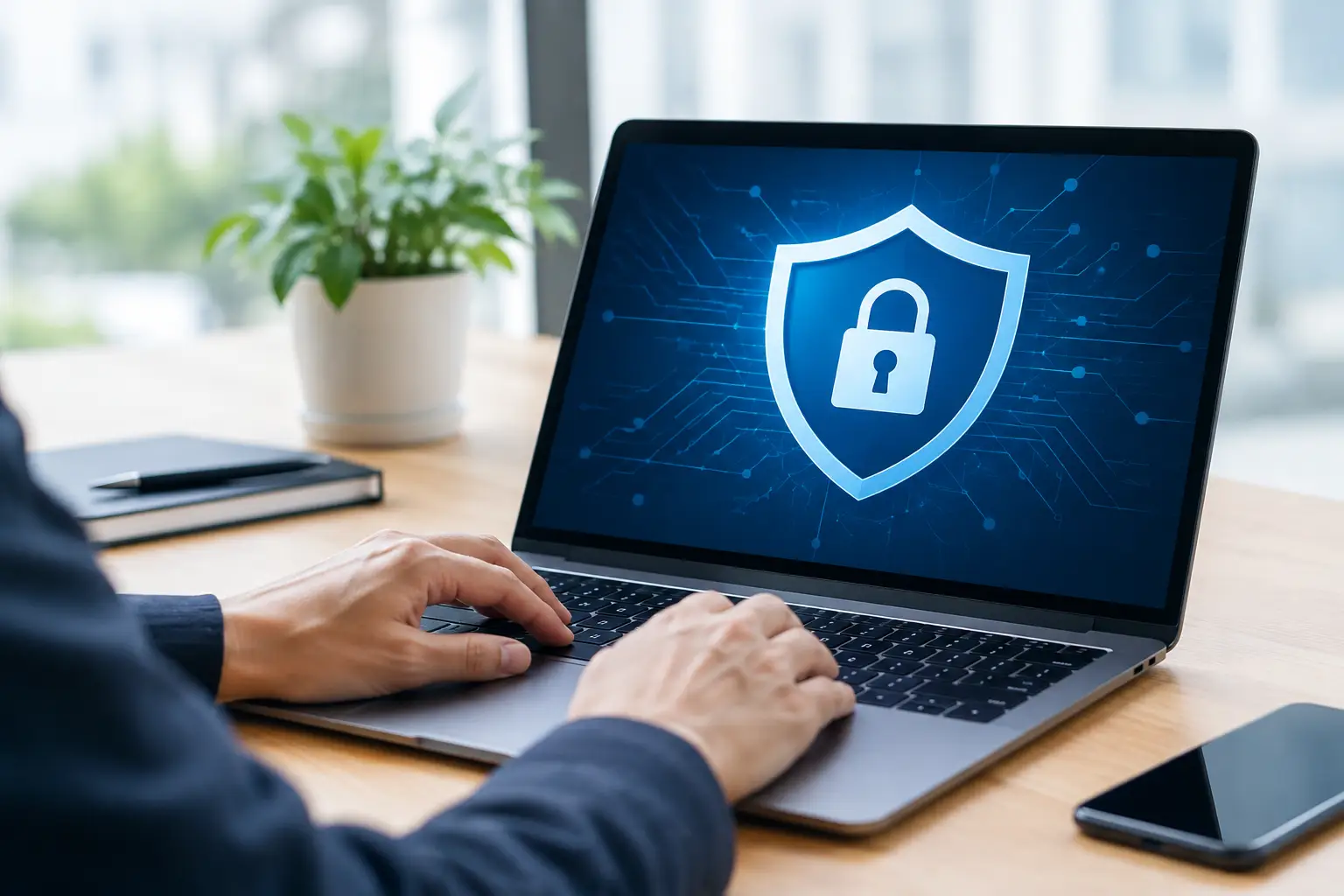
A ransomware incident rarely begins with a dramatic warning. It may start with an employee opening a convincing invoice, a reused password, or an unpatched server that no one realized was exposed. By the time files are encrypted and a ransom note appears, the business is already making difficult decisions about downtime, customer service, legal obligations, and recovery costs. The best ransomware protection tools reduce that exposure before an attack spreads and give your organization a workable path back if one gets through.
For small and midsize businesses, the right answer is not simply buying the most expensive security product. It is building a managed set of protections that fits your users, data, compliance responsibilities, budget, and ability to respond after hours.
What Ransomware Protection Should Actually Do
A useful ransomware security program does more than scan for known malware. It should block suspicious activity, identify an attacker moving through the network, protect the entry points attackers use most often, and preserve clean data that can be restored quickly.
That means looking beyond traditional antivirus. A good toolset combines endpoint detection, email filtering, identity protection, backup and recovery, and ongoing monitoring. Each layer covers a different failure point. If an employee clicks a malicious attachment, email security may stop it. If the attachment runs anyway, endpoint protection may isolate the device. If an attacker still encrypts data, immutable backups can prevent a business-ending outage.
The products below are strong options in their respective roles. The best fit depends on your existing Microsoft environment, industry requirements, number of locations, internal IT resources, and need for 24/7 response.
10 Best Ransomware Protection Tools for Businesses
1. Microsoft Defender for Business
Microsoft Defender for Business is a practical endpoint security choice for organizations already using Microsoft 365. It delivers next-generation antivirus, endpoint detection and response, vulnerability visibility, and automated investigation capabilities without forcing employees into a separate productivity environment.
It is especially appealing for smaller organizations because licensing can be straightforward. However, alerts still need review and follow-through. Without active monitoring, a useful detection can become just another message in an inbox.
2. Huntress Managed Detection and Response
Huntress is designed to help organizations identify persistent threats that basic security tools can miss. Its managed detection and response service adds human review to suspicious activity, helping businesses act on meaningful threats rather than sorting through every alert alone.
This is a strong option for organizations without an internal security operations center. The trade-off is that it works best as part of a broader managed security plan, not as a replacement for backups, email security, or patch management.
3. SentinelOne Singularity
SentinelOne provides endpoint detection and response with behavioral analysis and automated response capabilities. Rather than relying only on known malware signatures, it can identify unusual behavior associated with ransomware, such as rapid file encryption or malicious process activity.
For businesses with sensitive data, multiple sites, or remote users, its visibility can be valuable. Like other advanced endpoint tools, it requires careful configuration and someone accountable for investigating alerts and tuning policies over time.
4. Sophos Intercept X
Sophos Intercept X is well known for ransomware-focused endpoint protection, including behavioral detection and anti-exploit technology. Its ransomware rollback capability can be useful in certain scenarios by restoring files affected during an attempted attack.
Sophos can be a good fit for organizations that want strong prevention controls in a centralized console. Rollback is helpful, but it is not a substitute for tested backups. A serious incident can affect more than the files on one workstation.
5. CrowdStrike Falcon
CrowdStrike Falcon is a widely used cloud-delivered endpoint security platform with advanced detection, threat intelligence, and response options. It is often considered by organizations with higher-risk environments, compliance pressure, or a need for detailed visibility across many devices.
Its capabilities can exceed what a very small office needs, and pricing may reflect that. For a growing healthcare practice, law firm, municipality, or distributed business, however, the investment may make sense when paired with a response plan and experienced oversight.
6. Microsoft Defender for Office 365
Email remains one of the most common ransomware entry points. Microsoft Defender for Office 365 helps protect against malicious links, dangerous attachments, impersonation attempts, and phishing campaigns that target Microsoft 365 users.
It is a natural addition for businesses using Exchange Online. Strong email protection should also be paired with multifactor authentication and user education, because attackers increasingly use legitimate-looking messages and stolen credentials instead of obvious malware.
7. Proofpoint Email Security
Proofpoint is a leading email security option for organizations that need deeper phishing protection, impersonation defense, and message analysis. It is particularly useful where executives, finance teams, and client-facing staff receive high volumes of external email and are frequent targets for business email compromise.
The platform can be more than a small organization requires, but the risk is real for businesses that process payments, hold confidential records, or depend on email for daily operations. One fraudulent wire transfer request can be as damaging as a ransomware demand.
8. Veeam Data Platform
Veeam is a leading backup and recovery platform for virtual servers, physical systems, cloud workloads, and Microsoft 365 data. Its value in ransomware defense is its ability to support protected backup copies and faster recovery planning.
A backup product only helps if backups are configured correctly, monitored, and tested. Businesses should confirm how long a full restore will take, where backup copies are stored, and whether attackers could delete or encrypt them using compromised administrator credentials.
9. Acronis Cyber Protect
Acronis Cyber Protect combines backup capabilities with endpoint security controls. For organizations that prefer fewer vendors and a unified management approach, that combination can simplify operations.
It can be a sensible choice for small and midsize businesses, especially when managed by an IT provider. The key question is not whether one platform can do everything. It is whether its backup retention, recovery performance, security monitoring, and support model meet your actual business requirements.
10. Cisco Umbrella
Cisco Umbrella provides DNS-layer security that can block connections to known malicious domains, phishing sites, and command-and-control infrastructure. It helps protect users whether they are in the office, at home, or traveling.
DNS security will not stop every ransomware attack, but it can interrupt an attacker before malware downloads or communicates with outside systems. It is a valuable supporting control, particularly for businesses with remote staff and limited control over home networks.
Build a Protection Stack, Not a Product Collection
The best ransomware protection tools work when they are connected to clear responsibilities and repeatable processes. Buying multiple products without oversight can create blind spots, duplicate costs, and false confidence.
Start with endpoint protection and managed monitoring for all computers and servers. Add email filtering, multifactor authentication, and secure password practices to reduce the chance of an initial compromise. Maintain an inventory of devices and software, apply security patches promptly, and remove accounts that are no longer needed.
Then focus on recovery. Follow the 3-2-1 approach: keep at least three copies of important data, on two different types of storage, with one copy kept offsite or otherwise isolated. For higher-risk environments, immutable backups are especially valuable because they are designed to resist deletion or alteration during an attack.
Recovery testing matters just as much as backup completion notices. Your team should know who can authorize a restore, how to reach technology support after hours, which systems must return first, and how long each recovery stage is likely to take. A backup that has never been tested is an assumption, not a business continuity plan.
Questions to Ask Before Choosing a Tool
Before committing to a security platform, ask whether it is monitored around the clock, who responds when an alert is confirmed, and whether the provider can isolate an affected device quickly. Ask how the solution protects remote employees, cloud applications, servers, and mobile devices. If your organization handles regulated or confidential information, confirm that logging, retention, reporting, and recovery procedures support those obligations.
Also ask a more practical question: what happens on a Friday night when a server is encrypted? The answer should include a named support path, an incident response process, clean backup availability, and clear communication with leadership. Technology is only one part of the response.
AComp NJ helps businesses turn these tools into a managed protection and recovery plan, with accountable support, proactive monitoring, and guidance based on how your team actually works. The most useful next step is to review your current backups, endpoint coverage, and recovery process before an attacker forces the conversation.